Working with Difficult Lashes – Practical Tips for Lash Stylists
In your work as a lash stylist, you will eventually encounter natural lashes that require more precision and attention. We’ll guide you on how to work with challenging lashes and create a style that is long-lasting, safe, and aesthetically pleasing.
✅ Which lashes require more attention?
✅ How to work with very light lashes?
✅ How to style downward-growing lashes?
✅ When to choose lash lift and lamination over extensions?
✅ How to handle very curled lashes?
✅ How to style lashes for older clients?
Which lashes require more attention?
Some types of natural lashes can pose more challenges for lash stylists during application — they may be very light, extremely short, grow downward, or be heavily curled. With the right techniques, tools, and an individualized approach, you can tackle any challenge.
Very light lashes
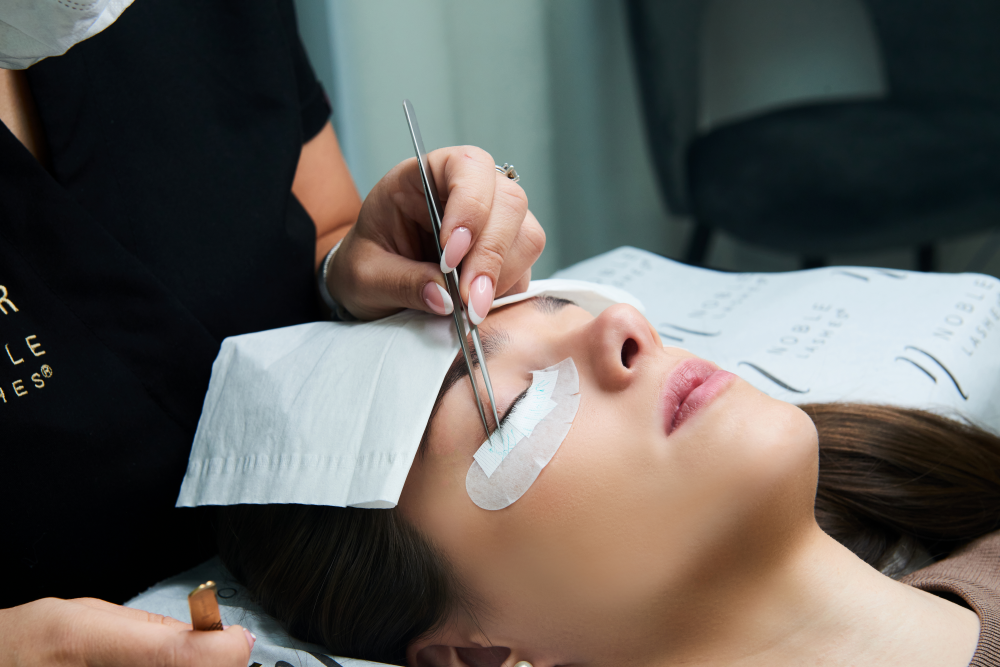
When working with very light lashes, properly selected accessories are crucial. A contrast-colored tape — like black or blue — makes each lash more visible, making isolation easier and minimizing stickies. Proper lighting is equally important — cosmetic lamps illuminate your workspace, enabling precise lash application.
Extremely short lashes
For very short lashes, adjust your tweezers to a more vertical angle to improve contact with the lash line. Avoid using overly long synthetic lashes to prevent a lever effect that could stress or weaken the natural lash. Select lash lengths carefully to ensure both technical correctness and client safety.
Very long lashes
Long natural lashes often tangle and cross, which can be frustrating for clients. In such cases, we recommend a lash lift and lamination instead of traditional extensions — this method aligns the hairs, enhances their color, and nourishes them.
See how to do a lash lift and lamination and explore the Fall in the Volume kit by Noble Lashes!
Downward-growing lashes
These lashes stick closely to the pad, making application tricky. A great solution is gently taping the eyelid using medical tape, which lifts the lashes and improves separation. Choose a curl with a stronger lift, like D or L, to redirect the lash shape effectively.
Very curled lashes
It’s often difficult to isolate the base of the natural lash with highly curled ones. One effective method is attaching the synthetic lash underneath the natural one. Bottom application is technically correct, maintains direction and style, and ensures a strong bond — giving your client exactly the desired look.
Styling lashes for older clients
As the skin ages, a drooping eyelid can make lash access more difficult and affect the final result. Older clients also tend to have thinner, shorter, and sparser lashes, requiring more precision and the right technique.
To make your job easier, use tried-and-true methods. Taping the upper lid with a lifting tape improves visibility and separation. You may also need to adjust the client's position — such as slightly tilting the head back or lifting the chin.
 Lash tip: For mature clients, classic lash styling methods work best — subtly opening the eye and lifting the outer corner without adding extra weight.
Grow your skills with Noble Lashes
Don't wait — sign up for a Noble Lashes course and feel confident in every situation!
- 1:1 lash extension course
- Volume lash extension course
- Lower lash extension course
- Lash lift and lamination course
Click here to watch the video on the Stylistka Warta Nobla YouTube channel.
→ See the current training offer ← and join the community of learners growing in the beauty industry with Noble Lashes!
Recommended