

Step-by-Step Lash Infill Guide
The key to maintaining a beautiful lash set is regular infills. Read this article to learn how to perform eyelash infills step by step.
In this article, you will learn:
➤ Why are lash infills necessary?
➤ What is the difference between an infill and a full new set?
➤ Step-by-step lash infill procedure.
➤ Can you perform a lash infill after another lash technician?
Why Are Lash Infills Necessary?
This is due to the natural growth cycle of human hair, which lasts approximately 90 days on average. Every day, a person naturally loses between 2 and 5 eyelashes from each eye, and new lashes grow in their place. This cycle consists of three main phases:
-
Anagen – the active growth phase (lasting 4–5 weeks). New, short lashes ("baby lashes") grow quickly, which means that synthetic lashes applied to them may develop noticeable outgrowth very rapidly.
-
Catagen – the transitional phase (2–3 weeks), during which the lash reaches its maximum length and the follicle begins to shrink. This is the ideal stage for a stable lash application.
-
Telogen – the resting and shedding phase (4–5 weeks). The lash becomes dormant and will soon be pushed out by a new growing hair.
Lash Infills vs. a New Set: Do You Need to Start from Scratch?
One of the most common questions is: Are all the lashes removed during an infill appointment?
The answer is: No. A lash infill involves filling only the areas where natural lashes have shed.
Although some lash technicians prefer to remove the entire set and apply a completely new one, a traditional infill only requires the removal of poorly positioned or unattractive extensions. This saves time (an infill takes approximately 1–1.5 hours, while a new full set usually takes around 2–2.5 hours).
Step-by-Step Lash Infill Procedure
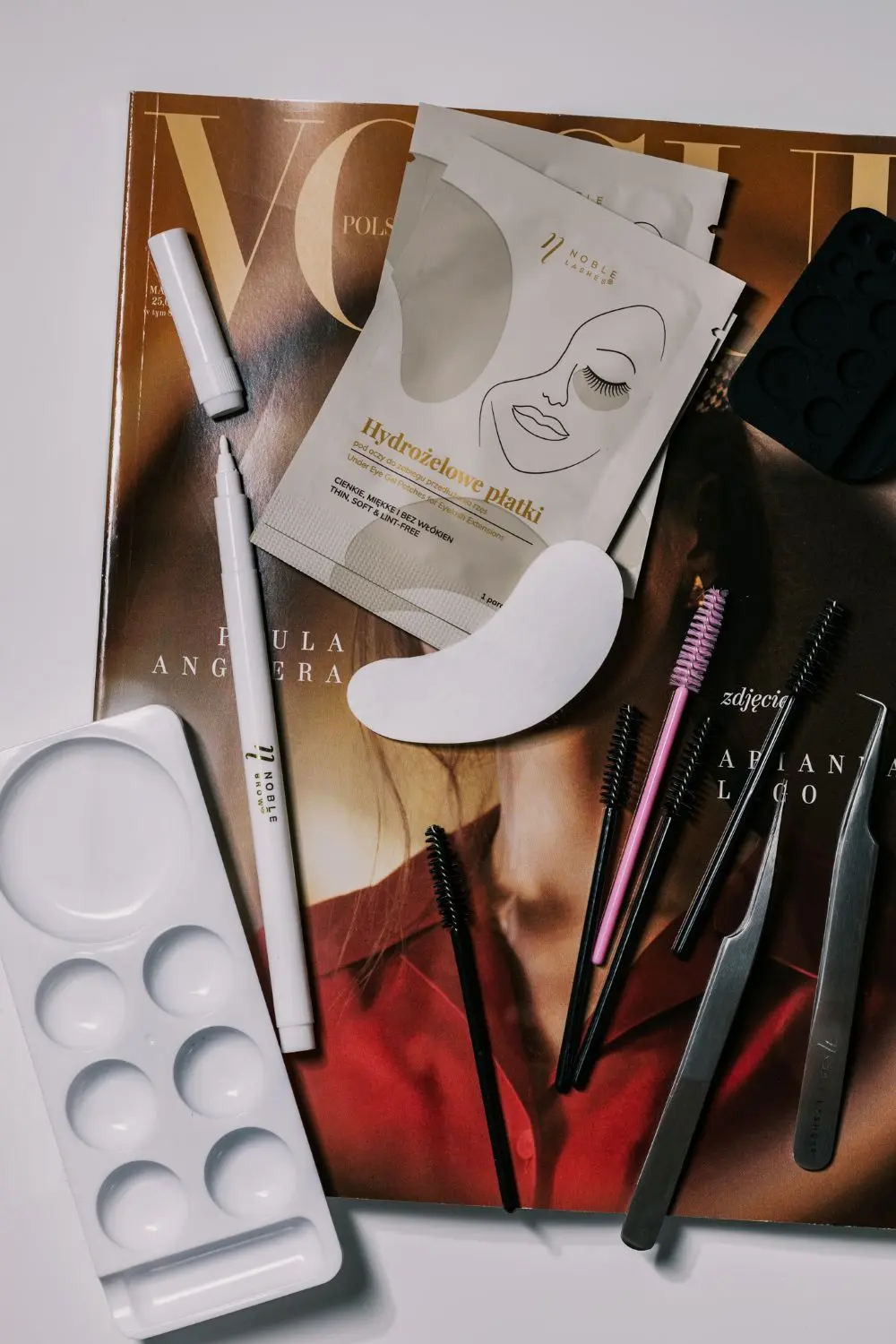
Properly performed lash infills require exceptional precision, excellent isolation skills, and a thorough understanding of lash product chemistry. Here is how a professional treatment should be carried out:
Step 1: Consultation, Lash Assessment and Cleansing
Before beginning the treatment, we assess the extent of lash loss and the overall cleanliness of the eye area. We thoroughly cleanse the lashes and lash line using a professional foaming lash shampoo and a soft cleansing brush.
Step 2: Removing Outgrown Extensions
This is the main difference between a new application and an infill. We identify and remove synthetic lashes that have grown too far away from the lash line or have become twisted. We use a mechanical removal method. Using one pair of tweezers, we hold the natural lash, while with the other we gently lift and pull the synthetic lash in the opposite direction. This allows the old adhesive bond to release safely without damaging the structure of the natural lash. We never apply liquid or gel remover to the entire eye area during an infill, as it would also dissolve the bonds of the lashes we wish to keep.
Step 3: Degreasing and Preparing the Natural Lashes
After removing outgrown extensions, we prepare the natural lashes using a cleaner, which thoroughly removes oils from the lashes. We may then apply a primer, which improves adhesion and accelerates the curing of the adhesive, particularly in areas where new lashes are being applied.
Step 4: Applying Synthetic Lashes
We proceed with the application using either the classic 1:1 technique or volume methods (2D–5D+), depending on the original styling.
-
We identify lashes in the catagen phase as well as free, newly grown anagen lashes.
-
Shorter and lighter extensions are applied to lashes in the growth phase to avoid overloading the delicate follicle and to allow for natural development.
-
We ensure a safe distance from the eyelid (approximately 0.5 mm) and maintain the correct lash direction and alignment.
Step 5: Final Check, Brushing and Finishing Touches
Once the application is complete, we carefully inspect the entire set for stickies. Any imperfections are corrected, and the lashes are brushed through using a clean mascara wand.

Can You Perform a Lash Infill After Another Lash Technician?
Most professional salons decline this service and instead recommend a full removal followed by a completely new set. Why?
-
Differences in Materials: Lashes from different manufacturers can vary significantly, even when labelled with the same specifications (e.g. C curl, 0.07 thickness, 11 mm length). The curl depth, flexibility of the fibre, and even the shade of black may differ. Some lashes have a bluish tint, while others are deep matte black or graphite. Mixing different lash brands on one eye often creates a chaotic and unaesthetic result.
-
Different Working Techniques: Every lash technician has their own individual style, mapping preferences (e.g. Fox Eye, Doll Eye, Kim Camellia), and safety standards (such as adhesive quantity and lash line distance). Infilling a poorly executed application (for example, one with multiple stickies) means taking responsibility for someone else's mistakes, which may ultimately damage the client's natural lashes.
Learn the secrets of working with clients, join our training courses and become a master lash artist!